
What is Meconium? Understanding Meconium & Meconium Aspiration Syndrome (MAS)

Meconium is the first stool of a newborn baby. In fact it is the first stool in all mammal babies! Meconium is darker, thicker, and stickier than regular stool. This is because meconium is composed of materials the baby swallowed during gestation, such as amniotic fluid (the fluid that surrounds and cushions the infant in the uterus).¹ If meconium has been present in the amniotic fluid for a long time, your baby may have yellowed skin and nails.
In an ideal situation, the infant will pass meconium shortly after birth (within the first 48 hours). It is worth noting that if a baby does not pass meconium within this timeframe, it could indicate a separate issue, such as an intestinal blockage or another medical condition, and should be evaluated by a healthcare provider. However, in some cases, the infant will pass meconium prior to birth, which causes “meconium staining” of the amniotic fluid.
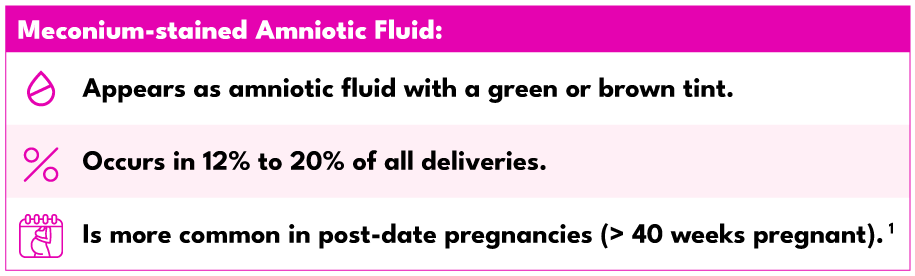
If a meconium-stained amniotic fluid occurs during birth, healthcare providers check your baby immediately for any signs of respiratory issues. It is usually harmless if an infant swallows a bit of meconium before birth.
The problem occurs when meconium is inhaled into the lungs, which can impair the baby’s breathing after birth. If the baby is born through meconium-stained fluid and is not breathing well, the healthcare team will:
- Perform immediate suctioning of baby’s nose, mouth, and throat.
- In more serious cases perform a tracheostomy suctioning, where a tube is placed within the infant’s throat to suction meconium from further down the windpipe.
- An oxygen mask may used in order to help the infant breath after removing meconium.2
Meconium Aspiration Syndrome (MAS) is a respiratory condition diagnosed when a newborn who was born through meconium-stained fluid develops significant breathing problems due to the meconium inhaled into the lungs. These breathing problems occur due to the texture of meconium being thick and sticky preventing the baby’s lungs from inflating and breathing in air. 2% – 10% of babies born through meconium-stained amniotic fluid develop MAS. Healthcare providers look for the following symptoms:
- Difficulty breathing
- Low heart rate
- Blue skin color (cyanosis)
- Rapid breathing
- Grunting
- Chest retractions
- Limpness2
Most infants with Meconium Aspiration Syndrome will receive specialized care from a neonatal intensive care unit (NICU) and receive oxygen if needed. A baby who gets extra oxygen but still struggles to breathe will get help from a breathing machine (ventilator).
An infant with severe MAS may need more treatment, such as:
- Surfactant to help open the lungs.
- Inhaled nitric oxide → this gas is added to oxygen to open blood vessels and improve oxygen delivery.
- ECMO machine: using a pump that works like the heart, pumps blood from the body through an artificial lung. It adds oxygen to the blood and removes carbon dioxide, then sends the blood back to the child.3
Most babies with MAS get better within a few days or weeks, depending on how much meconium they inhaled.
Additionally, infants born through meconium-stained amniotic fluid are at risk of developing meconium aspiration syndrome (MAS) and Hypoxic-Ischemic Encephalopathy (HIE) a brain injury caused by a lack of oxygen and blood flow to the brain.4 Read our other blog on preterm infants and HIE from April for more information.
Education in maternal health is empowering! Being informed about conditions like meconium staining & MAS helps parents and caregivers recognize the importance of prompt medical attention and understand the excellent care available in neonatal medicine.
REFERENCES
- Cleveland Clinic. (n.d.). Meconium. Retrieved January 25, 2026, from https://my.clevelandclinic.org/health/body/24102-meconium
- Cleveland Clinic. (n.d.). Meconium aspiration syndrome. Retrieved January 25, 2026, from https://my.clevelandclinic.org/health/diseases/24620-meconium-aspiration-syndrome
- Nemours KidsHealth. (n.d.). Meconium aspiration syndrome. Retrieved January 25, 2026, from http://kidshealth.org/en/parents/meconium.html
- Gopagondanahalli, K. R., Li, J., Fahey, M. C., Hunt, R. W., Jenkin, G., Miller, S. L., & Malhotra, A. (2016). Preterm Hypoxic-Ischemic Encephalopathy. Frontiers in pediatrics, 4, 114. https://doi.org/10.3389/fped.2016.00114

